Plan your packaging line around the product, output, space and growth you need
Industry packaging lines

Sauces & Condiments Packaging Lines

Sauces, dressings and condiments can vary sharply in viscosity, particulates and temperature. The dosing route, product path and shut-off design must be proven with representative product.

Application-led designRepresentative product trialsUK support
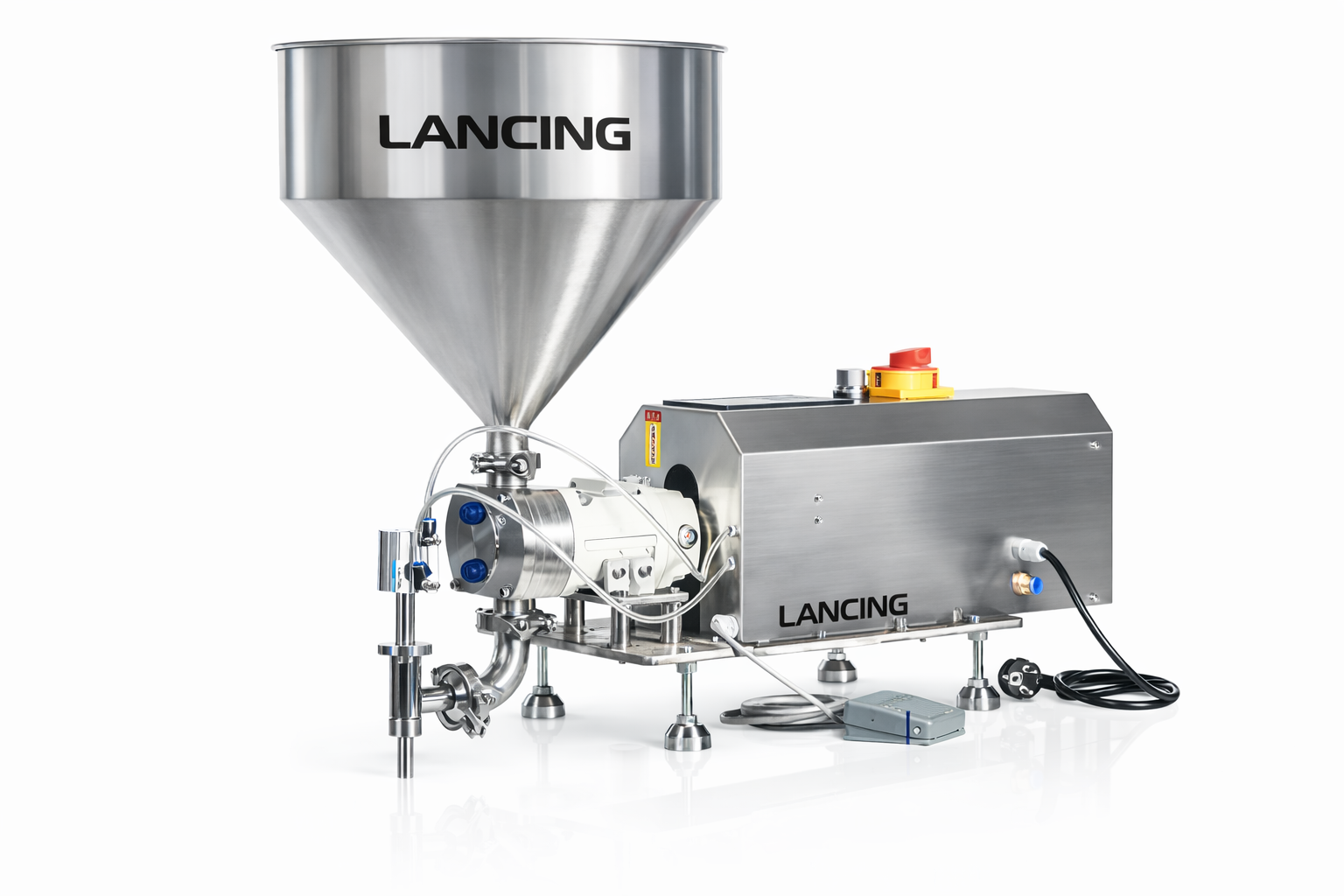
Rotor pump filler for gels, pastes and viscous products
Application scope

Products and pack formats to define

Sauces, dressings and condiments can vary sharply in viscosity, particulates and temperature. The dosing route, product path and shut-off design must be proven with representative product. The complete approved range should be recorded before final equipment sizing and tooling decisions.

Product and pack

Ketchup, mayonnaise and dressings

Confirm representative samples, operating conditions and the required production range.

Product and pack

Syrups, chutneys and particulate sauces

Confirm representative samples, operating conditions and the required production range.

Product and pack

Hot-fill and ambient products

Confirm representative samples, operating conditions and the required production range.

Product and pack

Bottles, jars, tubs and premade pouches

Confirm representative samples, operating conditions and the required production range.

Typical process route

Build the line around product behaviour

The most reliable route considers product supply, container control, dosing, closing and presentation as one sequence.

  1. Condition and deliver product to the fillerDefine equipment, transfers, controls and the evidence needed to accept this stage.
  2. Dose with a suitable piston, pump, weight or other methodDefine equipment, transfers, controls and the evidence needed to accept this stage.
  3. Control tails, strings and container cleanlinessDefine equipment, transfers, controls and the evidence needed to accept this stage.
  4. Close, seal, label, code and pack finished unitsDefine equipment, transfers, controls and the evidence needed to accept this stage.
Packaging line used to illustrate sauces & condiments packaging lines
Risk-led specification

Issues to resolve before machine selection

Each risk should be converted into a design requirement, a trial, an operating control or an explicitly accepted limitation. Product and component samples should represent the difficult extremes rather than only a nominal production format.

  • 1
    Product shear, aeration or phase separation

    Assess the likelihood, production effect and design or operating control before the line is ordered.

  • 2
    Particulates bridging valves or nozzles

    Assess the likelihood, production effect and design or operating control before the line is ordered.

  • 3
    Hot product changing viscosity and pack stability

    Assess the likelihood, production effect and design or operating control before the line is ordered.

  • 4
    Allergen and cleaning requirements

    Assess the likelihood, production effect and design or operating control before the line is ordered.

Application brief checklist

Send the following information with the initial enquiry. Early clarity usually shortens the route to a credible line concept and makes quotations easier to compare.

  • Viscosity at filling temperature
  • Largest particulate and concentration
  • Product supply method and batch size
  • Fill volume and tolerance
  • Container opening and closure details
  • Cleaning and allergen-control procedure

Testing and production handover

Agree the factory and site test materials, run duration, quality checks, required good output and treatment of interruptions. Training should cover safe startup, shutdown, replenishment, changeover, cleaning, first-off approval and basic fault response.

Clear project answers

Sauces & Condiments Packaging Lines FAQs

Why are product trials important?

Bench descriptions rarely capture real flow, particulates and temperature effects. Representative trials reduce dosing and nozzle risk.

Can hot-fill products be handled?

Yes, subject to compatible product-contact parts, container behaviour, guarding and a controlled temperature range.

How are strings and tails reduced?

Positive shut-off nozzles, suck-back, nozzle geometry, diving movement and product conditions can all influence cut-off quality.

Your packaging line starts with the right brief

Tell us what you need to pack

Share your product, container or pack, closure, label, target output and available space. We will help you define a practical line route and the next information needed.