
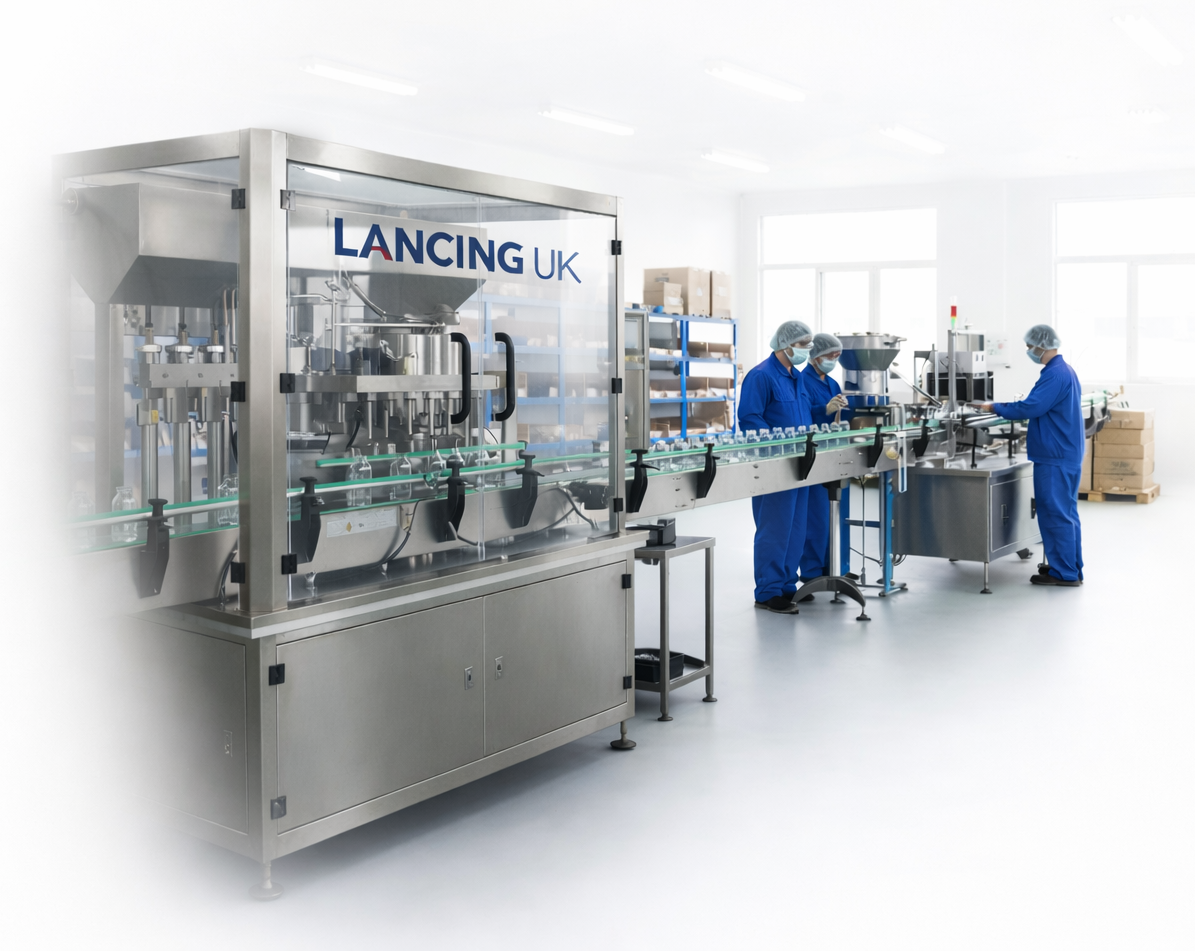
Specify the line as one operating process
Bring each production stage into one coordinated project. A complete line can combine container infeed, product dosing, closure application, inspection, coding, labelling, accumulation and finished-pack handling around one agreed operating brief.
The engineering brief should describe the required good packs at the end of the line, not only the cycle rate of individual machines. Product behaviour, component quality, replenishment, changeovers, inspection and short stops all affect the sustainable result. The line should therefore be balanced around the real production calendar and a defined operating margin.
Start with evidence
Provide representative product, containers, closures, labels and secondary packaging from the approved range. Include the most difficult combinations, dimensional tolerances and any temperature or storage conditions that change behaviour.
Typical line stages
- Container feeding, rinsing or preparationDefine the incoming condition, operator activity and transfer requirements before equipment is selected.
- Accurate filling or dosing for the productMatch the process technology to representative product and packaging samples across the full approved range.
- Cap, closure, seal and tamper-evidence stagesCoordinate the mechanical and control interfaces so upstream and downstream stages recover predictably.
- Labelling, coding, inspection and end-of-line packingConfirm inspection, rejection, documentation and handover requirements against measurable acceptance criteria.
What shapes the final specification
These subjects should be resolved with values, samples and named responsibilities. Where uncertainty remains, the proposal should state the assumption and the test or design review that will close it.
Product characteristics and cleanability
Record the operating range, difficult extremes and any allowable variation rather than supplying only a nominal value.
Pack formats, change parts and SKU range
Include controlled samples, drawings or test evidence so the design basis can be verified before manufacture.
Required net output rather than headline machine speed
State the required result and how it will be checked during factory and site acceptance testing.
Interfaces, controls, utilities, footprint and access
Assign the interface owner and document the utilities, access, safety and maintenance implications.
Performance and acceptance
Acceptance criteria should define the tested format, material quantities, operating duration, good output, quality checks, allowable interruptions and action-closeout process. A factory acceptance test demonstrates the line before dispatch; site acceptance confirms installation, utilities, interfaces and agreed production performance in the operating environment.
Information to send with an enquiry
- Product description, safety information and representative samples
- Container, closure, label and case drawings or physical samples
- Fill or pack range, target good output, batch size and shift pattern
- Available layout, access, working heights and utility details
- Required checks, reject handling, coding and production data
- Installation window, training, spares and support expectations