Plan your packaging line around the product, output, space and growth you need
Packaging line solutions

Semi-Automatic Packaging Lines

Semi-automatic equipment can improve dosing, closure consistency and presentation while retaining operator flexibility. The layout should minimise lifting, reaching and unnecessary handling between stages.

UK project supportProduct and pack trialsIntegration to handover
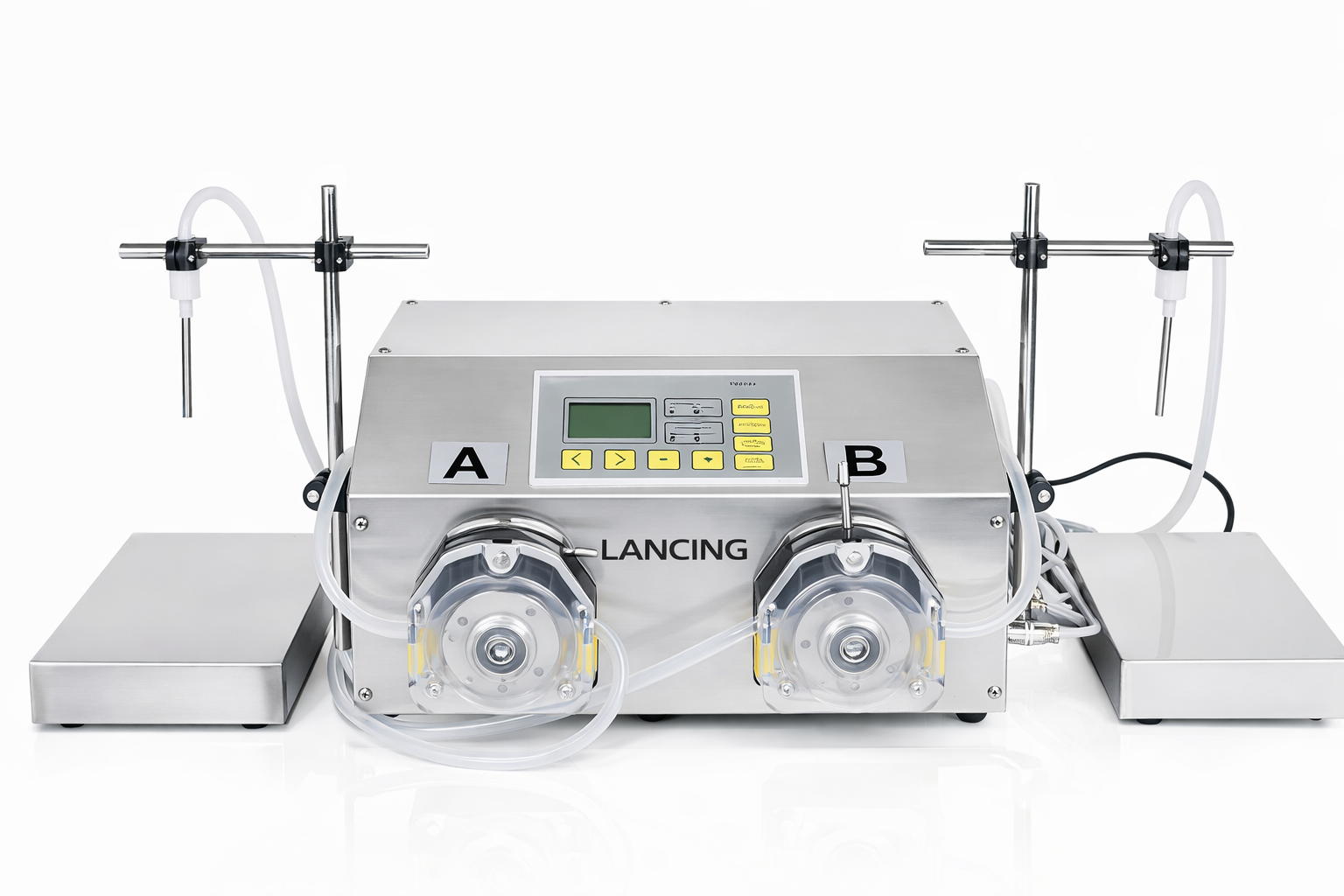
Peristaltic pump filling machine for small liquid doses
A coordinated production route

Specify the line as one operating process

Semi-automatic equipment can improve dosing, closure consistency and presentation while retaining operator flexibility. The layout should minimise lifting, reaching and unnecessary handling between stages.

The engineering brief should describe the required good packs at the end of the line, not only the cycle rate of individual machines. Product behaviour, component quality, replenishment, changeovers, inspection and short stops all affect the sustainable result. The line should therefore be balanced around the real production calendar and a defined operating margin.

Start with evidence

Provide representative product, containers, closures, labels and secondary packaging from the approved range. Include the most difficult combinations, dimensional tolerances and any temperature or storage conditions that change behaviour.

Typical line stages

  1. Operator-presented container fillingDefine the incoming condition, operator activity and transfer requirements before equipment is selected.
  2. Assisted cap placement and tighteningMatch the process technology to representative product and packaging samples across the full approved range.
  3. Bench or floor-standing label applicationCoordinate the mechanical and control interfaces so upstream and downstream stages recover predictably.
  4. Manual accumulation, inspection and packingConfirm inspection, rejection, documentation and handover requirements against measurable acceptance criteria.

What shapes the final specification

These subjects should be resolved with values, samples and named responsibilities. Where uncertainty remains, the proposal should state the assumption and the test or design review that will close it.

Specification point 1

Batch sizes and daily production windows

Record the operating range, difficult extremes and any allowable variation rather than supplying only a nominal value.

Specification point 2

Operator ergonomics and product replenishment

Include controlled samples, drawings or test evidence so the design basis can be verified before manufacture.

Specification point 3

Cleaning, changeovers and mixed-SKU work

State the required result and how it will be checked during factory and site acceptance testing.

Specification point 4

Future automation and retained equipment

Assign the interface owner and document the utilities, access, safety and maintenance implications.

Performance and acceptance

Acceptance criteria should define the tested format, material quantities, operating duration, good output, quality checks, allowable interruptions and action-closeout process. A factory acceptance test demonstrates the line before dispatch; site acceptance confirms installation, utilities, interfaces and agreed production performance in the operating environment.

Lower entry cost than a fully automatic lineBuilt into the project brief and verified at the agreed handover stage.
Fast response to varied formats and short runsBuilt into the project brief and verified at the agreed handover stage.
Improved repeatability over fully manual packingBuilt into the project brief and verified at the agreed handover stage.
A phased path toward higher automationBuilt into the project brief and verified at the agreed handover stage.

Information to send with an enquiry

  • Product description, safety information and representative samples
  • Container, closure, label and case drawings or physical samples
  • Fill or pack range, target good output, batch size and shift pattern
  • Available layout, access, working heights and utility details
  • Required checks, reject handling, coding and production data
  • Installation window, training, spares and support expectations
Clear project answers

Semi-Automatic Packaging Lines FAQs

What output can a semi-automatic line achieve?

Output depends on product, fill volume, closure, label, operator tasks and batch organisation. A timed product trial gives the most useful estimate.

Can semi-automatic machines be linked by conveyor?

Yes, although the benefit depends on the remaining manual tasks and whether the conveyor improves rather than complicates operator flow.

Is semi-automatic suitable for contract packing?

Often. It can support frequent format changes and varied products, provided cleaning and tooling are planned carefully.

Operator-led line design

Balance operator work with the machine cycle and batch pattern

A semi-automatic packaging line should make manual work repeatable, safe and visible. The specification needs to show who presents the pack, starts or confirms the process, removes finished packs, replenishes materials and completes quality checks across the full batch—not only during a short demonstration.

Operator work-balance worksheet

Map each task against the expected production window so labour content and waiting time are understood before equipment is fixed.

Operator task schedule for a semi-automatic packaging line
Task groupQuestions for the project teamEvidence to review
Pack presentationHow are empty containers or pouches unpacked, oriented and located in the process?Representative packs, trays or cases and an observed loading sequence.
Process initiationIs the cycle started by switch, foot control, sensor or automatic detection, and what confirmation is required?Operating method, risk review and a repeatable cycle observed with intended users.
Material replenishmentHow often are product, closures, labels, film or cartons added and what interruption does this create?Container sizes, replenishment quantities, safe lifting route and normal refill time.
Quality activityWhich fill, closure, label, code, seal or weight checks are made and where are results recorded?Sampling plan, gauges or instruments, reject route and ownership of first-off approval.
Finished-pack removalDoes the operator place packs into trays, cases or another machine, and can output accumulate safely?Pack-out pattern, work-in-progress space and downstream cycle or collection method.
Changeover and cleaningWhich parts are adjusted, removed, cleaned, dried and verified before the next product?Format matrix, part list, tools, storage and an observed end-to-end changeover.

Design choices that improve repeatability

The objective is not to remove every manual action; it is to make necessary actions consistent and easy to verify.

Positive location

Use guides, nests or fixtures where pack position affects filling, closing, coding or labelling quality.

Clear status

Show ready, cycle, fault and completion states so the operator is not relying on machine sound or guesswork.

Controlled settings

Record approved settings and change parts, with simple confirmation that the correct format is installed.

Managed handoff

Define how packs move between modules so manual transfer does not introduce contamination, damage, mix-up or unstable queues.

Plan a credible upgrade route

A semi-automatic project can be the first phase of a larger line when boundaries are documented from the start.

  • Choose working heights and pack datums that can connect to future conveyors or automatic handling.
  • Reserve electrical capacity, I/O, network ports and panel space only where a defined future function justifies them.
  • Use product-contact and cleaning arrangements that remain practical when production windows become longer.
  • Record which manual quality checks could later be automated and what reject handling would then be required.
  • Preserve access for automatic closure or label feeding without compromising the safe initial installation.
  • Retain the approved performance and trial evidence so future changes have a reliable baseline.
Buyer questions

Semi-automatic packaging line questions

How many operators does a semi-automatic line need?

The answer depends on task time, replenishment, pack handling, quality checks, batch pattern and the cycle of each module. Observe or simulate the complete work sequence instead of assigning labour from machine count alone.

When is a semi-automatic line preferable to a fully automatic line?

It can suit variable or shorter batches, frequent format changes, constrained space or a staged investment where manual actions remain practical. The decision should compare whole-life operating requirements, not only purchase cost.

Can semi-automatic machines be linked by conveyors?

Yes, where pack presentation, cycle timing, accumulation, controls and guarding are appropriate. The line should still define responsibility for loading, recovery and quality checks at each handoff.

Turn the guidance into a project brief

Use the related pages to document the product, pack, output, layout and acceptance evidence before requesting a detailed proposal.

Your packaging line starts with the right brief

Tell us what you need to pack

Share your product, container or pack, closure, label, target output and available space. We will help you define a practical line route and the next information needed.