
Packaging Line Controls Integration Guide
Define operating modes, line states, machine handshakes, recipe ownership, fault response and controlled recovery for an integrated packaging line.
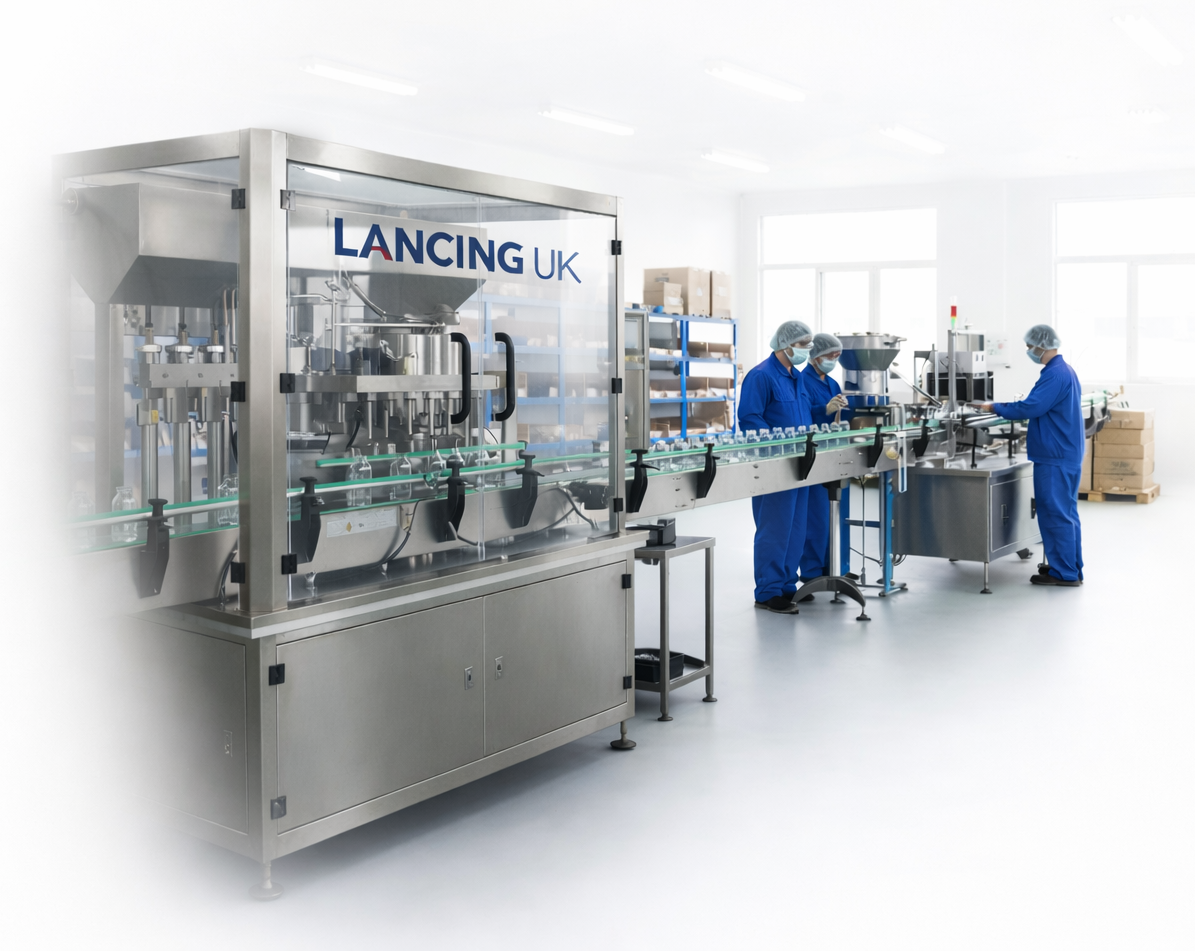
Specify line behaviour across every machine boundary
Controls integration should make the complete line predictable during production, stops, changeovers, faults and recovery—not merely make separate machines run at the same time.
A packaging line may combine machinery from several suppliers, retained assets, manual tasks, inspection devices, conveyors and site systems. Reliable operation depends on the behaviour at their boundaries. A simple run permissive can be enough for one transfer, while another needs pack tracking, speed coordination, recipe confirmation and a defined loss-of-communications state.
Create an interface register for every mechanical, electrical, control, safety and data connection. Give each signal or function an owner, direction, meaning, valid state, timeout, alarm and test. This prevents different suppliers implementing the same word—such as ready, fault or complete—with incompatible assumptions.
Write the controls philosophy before software is treated as finished
The controls philosophy should describe how the complete line is intended to behave in production, setup, cleaning, maintenance and recovery. It should not be a list of PLC brands or screen pages. Define the operating modes, line states, command ownership, permitted transitions, alarms, operator roles and the evidence needed to show that connected machines respond consistently.
Use a state model that production and engineering teams can recognise. Typical descriptive states include stopped, ready, starting, producing, starved, blocked, controlled stopping, faulted and intervention required. The exact implementation depends on the machines, but the project should agree what each state means at the line boundary and which conditions permit the next transition.
| Interface | Minimum definition | Failure and recovery question |
|---|---|---|
| Product transfer | Pack-present, ready, running, blocked, starved and transfer-permission conditions. | What happens to the pack already between machines when either side stops? |
| Speed and pacing | Master reference, permitted range, ramp behaviour and independent/manual operation. | Which station owns the rate and how is a speed mismatch prevented? |
| Stop categories | Normal stop, controlled stop, fault stop, emergency stop and loss-of-utility response. | Which equipment stops, in what sequence, and what state is retained? |
| Recipe and format | Authoritative recipe, format identity, parameter ownership, version and mismatch handling. | How is an incompatible or incomplete changeover prevented? |
| Inspection and reject | Inspection decision, pack tracking, reject request, actuator confirmation and reject-bin state. | How is a failed reject or uncertain pack handled? |
| Data exchange | Required tags, timestamps, quality context, buffering, permissions and loss-of-communications response. | Can the line continue safely and can missing records be reconciled? |
| Safety interface | Safety function boundary, reset zones, guard dependencies and validated interconnections. | Can one machine restart while an adjacent intervention remains unsafe? |
Design recovery as carefully as the normal cycle
Many integration faults appear after an interrupted transfer rather than during steady production. A controlled recovery sequence should identify packs whose status is uncertain, protect product and packaging quality, prevent duplicate coding or labelling and return stations to a known state. Avoid requiring an operator to clear every machine unless that is the safest and most reliable response for the actual process.
Record whether a restart is automatic, prompted or prohibited after each event. Where packs are tracked between inspection and reject, document how tracking survives a stop, manual movement, power loss or communications interruption. Where recipes are shared, identify the authoritative record and how a mismatch is displayed and resolved.
Keep software change and backup evidence within the handover pack
The final record should identify controller and HMI programs, drive and vision settings where included, network configuration, recipe versions, user access, backup method, restoration test and the person authorised to approve later changes. A backup is not proven until the site knows which hardware and software are needed to restore it.
Use the data and traceability guide where production records or codes cross the machine boundary. Use the documentation and handover guide to define the controlled records required after commissioning.
Prove normal, abnormal and recovery sequences
A complete controls test should challenge transitions and faults, not only demonstrate a clean continuous run.
Review the sequence
Walk through startup, production, normal stop, product run-out and shutdown with production and engineering users.
Challenge interfaces
Simulate blocked, starved, missing component, inspection fail, reject fail and machine-not-ready conditions.
Test recovery
Confirm pack disposition, reset scope, restart permission, recipe retention and operator instructions after interruption.
Retain evidence
Record software revisions, test results, open actions and the approved as-installed configuration.
Packaging-line controls integration questions
What is a packaging-line controls philosophy?
It is the agreed description of operating modes, line states, command and recipe ownership, machine handshakes, stop and restart behaviour, alarms, data exchange and the evidence used to approve the integrated function.
Should one PLC control every machine on the line?
Not necessarily. A complete line can integrate autonomous machine controls or use a central architecture. The important requirement is a defined interface, clear ownership and verified behaviour during normal operation and faults.
Who should own the master speed reference?
The correct owner depends on the process and constraint. The design should state which station sets or limits the line rate, how other machines follow it and what happens when a machine cannot accept the reference.
How should recipe changes be controlled?
Define the authoritative recipe, format identifier, permitted user roles, parameter limits, confirmation steps and mismatch response. Retain a revision record and verify every affected station during changeover.
What should be tested after a communications failure?
Test the safe and quality response, alarm, retained or lost data, pack status, reconnection, recipe consistency and recovery without duplicate or missing actions.
Prepare the controls-integration brief
Provide the current architecture and required production behaviour rather than prescribing unsupported signals too early.
- Line sequence, retained machines and current controller/network information.
- Operating modes, manual tasks and expected automatic boundaries.
- Product and format recipes, quality decisions and code/traceability requirements.
- Required machine states, line pacing and accumulation behaviour.
- Safety zones, guard dependencies and competent specialist responsibilities.
- Site data interfaces, user roles, backups and change-control expectations.
- FAT/SAT challenge tests and evidence required for release.
Pair this brief with the packaging-line integration scope and FAT/SAT protocol.
Share the line sequence, existing controls information, required modes, recipe ownership and known fault or recovery problems. Lancing can help structure the interface review for the complete line.