
Packaging Line Engineering Guides
Practical UK guidance for defining, integrating, proving and handing over complete packaging lines without separating machinery, controls, people, quality and production evidence.
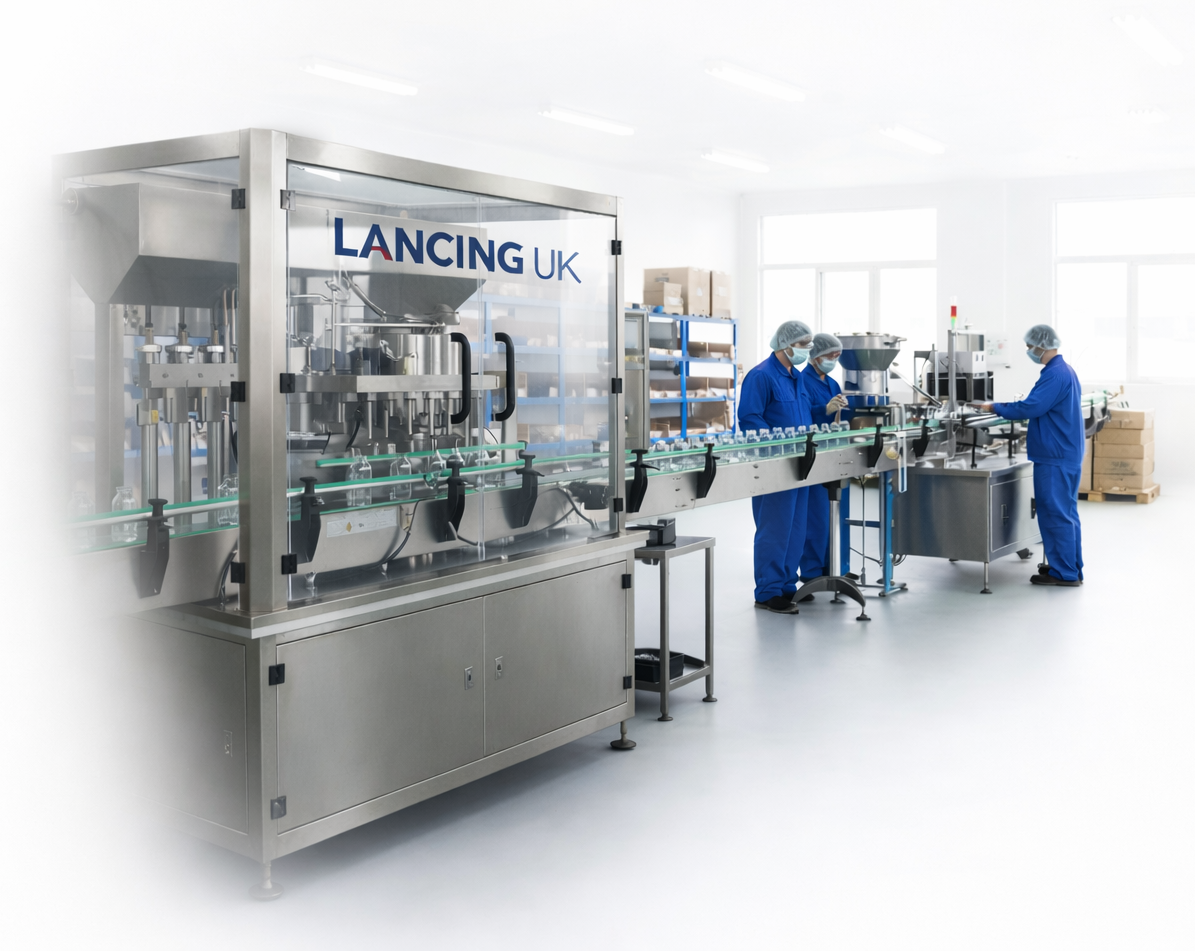
Plan the complete production result, not isolated machines
These guides help engineering, production, quality and procurement teams convert a packaging-line requirement into practical decisions and testable evidence.
An integrated packaging line is a working system of products, packaging components, machines, conveyors, controls, utilities, operators and site procedures. A technically credible decision therefore needs more than a list of equipment. It needs a defined operating envelope, clear interface ownership and evidence that the system can run, stop, recover, change format and be maintained as intended.
Use the resource pages below alongside the existing buyer, layout, specification, quotation, FAT/SAT and installation guides. Each resource addresses one distinct project risk and links back to the commercial pages that own the complete-line scope.
OEE and bottlenecks
Define good output, collect loss evidence and locate the constraint that controls the complete line.
Read the guideControls integration
Specify operating modes, machine handshakes, line states, fault ownership and controlled recovery.
Read the guideRisk assessment and machinery safety
Plan responsibilities, foreseeable intervention, safety boundaries and evidence for the assembled line.
Read the guidePackaging-line troubleshooting
Trace symptoms across upstream causes, machine interfaces, materials, settings and downstream restrictions.
Read the guideInspection and reject systems
Connect the quality decision, inspection point, reject action and proof that nonconforming packs are controlled.
Read the guideDocumentation and handover
Define the drawings, manuals, software records, settings, training evidence and open actions needed after SAT.
Read the guideOperator training
Build role-based competence for operation, replenishment, changeover, cleaning, fault response and escalation.
Read the guideCleaning and hygienic design
Review product contact, access, drainage, residues, cleaning method and release evidence across the complete line.
Read the guideData and traceability
Define codes, records, interfaces, event ownership, data retention and recovery from lost or duplicated information.
Read the guidePackaging-line sample trials
Select representative materials, operating extremes, measurements and evidence before design approval or FAT.
Read the guideUse the guides as one controlled project route
Begin with the production duty and the complete packaging-line scope. Use the specialist guides to turn broad requirements into controlled decisions, named responsibilities and evidence. A project does not need every document at enquiry stage, but it should identify what is confirmed, what remains an assumption and what must be proved before release.
The most useful route is iterative: define the line, test the difficult products and formats, review the layout and interfaces, agree acceptance, then retain the final settings and records needed to operate the installed system. This avoids treating performance, safety, quality, training and data as separate topics that are discovered only after machinery arrives.
- Use one product-and-pack matrix across design, trials, FAT, SAT and changeover planning.
- Link each requirement to an owner, approval point and evidence record.
- Measure saleable output and loss reasons at complete-line level, not only individual-machine speeds.
- Protect safe access, cleaning, maintenance and recovery tasks in the layout and controls philosophy.
- Carry controlled drawings, software records, settings, training and open actions into handover.
| Project decision | Evidence to prepare first | Guide to use |
|---|---|---|
| Is the current or proposed line capacity credible? | Good-output definition, product/format context, stops, rejects and blocked/starved observations. | OEE and bottleneck guide |
| How should machines start, stop and recover together? | Machine states, line sequence, retained controls, recipe ownership and known fault cases. | Controls integration guide |
| What evidence is needed before committing to the process? | Production-intent products and packs, operating extremes, quality rule and the decision the trial must close. | Sample-trial guide |
| How will uncertain or failed packs be contained? | Defect definitions, inspection point, pack path, reject action and quality response. | Inspection and reject guide |
| Can the site operate and support the line after SAT? | Roles, documents, software, settings, spares, training and outstanding actions. | Documentation and handover guide |
Keep the project evidence proportionate to risk
Not every line needs the same depth of study. A compact semi-automatic system and a multi-stage automated line have different interface, data, staffing and acceptance needs. The evidence should be proportionate to the possible effect of a wrong decision: product loss, quality escape, unsafe intervention, missed output, difficult changeover or an unsupported system after handover.
Use early observations to reduce uncertainty, then convert the important remaining assumptions into named tests or design reviews. For example, a short sample trial can establish whether a product or component needs a different process route; a layout review can protect access and future expansion; an interface challenge can show whether retained machinery can recover predictably. Each record should identify the tested condition and its limits so it is not later read as proof of every product or format.
The resource centre complements the complete packaging-line buyer’s guide, layout guide, quotation comparison guide and FAT/SAT guide. Together they provide a route from initial production need to an accepted and supportable line without prescribing unsupported capacities or machine specifications.
Share the product and pack range, required good output, available space, retained equipment and current unknowns. Lancing can help organise the next design, trial or acceptance evidence without assuming unverified machine performance.