
Packaging Line Cleaning and Hygienic Design Guide
Plan product contact, residue control, conveyor cleaning, safe access, chemical compatibility and release evidence across an integrated packaging line.
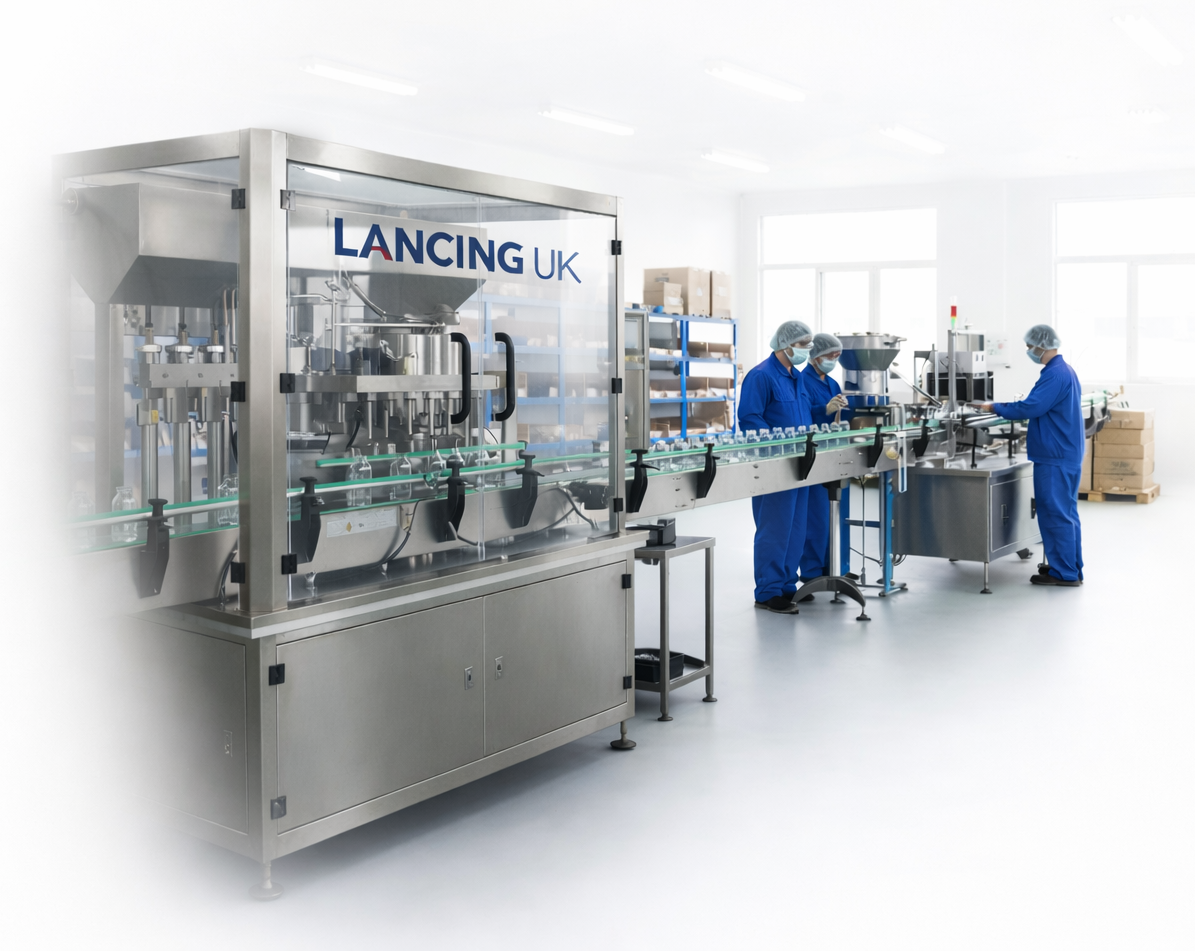
Design the cleaning route across machinery, conveyors and operator tasks
A complete-line cleaning plan connects product-contact parts, external surfaces, spills, conveyors, change parts, safe access and objective release evidence.
Cleaning requirements affect machine selection, layout, controls, utilities, changeover, maintenance and acceptance. Define the products, contamination risks, cleaning method and site release standard before the detailed line design is fixed.
This guidance is qualitative. Product hygiene, allergen, hazardous-substance and validated-cleaning requirements need the site’s competent quality, safety and process specialists, supported by product and cleaning-chemical information.
Map the residue route across the complete line
Begin at product supply and follow every point where product, dust, vapour, fragments or cleaning liquid can escape. Include filler nozzles, container mouths, closure presentation, reject stations, drips during stoppage, change parts, conveyor returns, catch trays and manual sampling. A clean filler can still feed contaminated packs into downstream equipment if the surrounding transfer and recovery method is not included.
Define whether parts are cleaned in place, removed to a wash area or replaced with a clean set. Record tool requirements, lifting or handling needs, storage and the method for preventing clean and dirty parts being mixed. Where a product or allergen risk requires validated cleaning, the site’s quality and hygiene specialists should define the method and release evidence.
| Area | Evidence to define | Design or operating question |
|---|---|---|
| Product contact | Product path, contact materials, joints, seals, dead spaces, drains and disassembly method. | Can residues be removed, inspected and controlled for the actual product and cleaning method? |
| Product splash and drip | Likely release points, nozzle behaviour, cap/closure contamination, overspill and recovery. | Can contamination be contained without spreading to belts, guides, sensors or adjacent stations? |
| External surfaces | Frame, guards, cable routes, fasteners, ledges, voids and access around feet or supports. | Are surfaces accessible and compatible with the site’s cleaning method and chemicals? |
| Conveyors and transfers | Belt/chain construction, support bed, guide rails, return path, catch trays and removal or lift-up access. | Can the product-contact risk and hidden residue areas be inspected and cleaned? |
| Cleaning operation | Manual/CIP method, chemicals, temperature, contact time, rinsing, drying, waste and isolation. | Who performs each task and how is safe access provided? |
| Release evidence | Visual inspection, swab or other test where applicable, allergen/product change rules and record owner. | What objective evidence allows production to restart? |
Protect cleanability in layout and changeover decisions
Access around the machine, drains, services, guarding and adjacent equipment can determine whether a theoretically cleanable component can be cleaned in practice. Review the operator reach, removal path, working height, safe isolation, lighting and space for inspection. Avoid routing cables or services where they create inaccessible ledges or prevent removal of product-zone components.
Cleaning time should be separated from format-change time unless the same task genuinely serves both. Record preparation, product recovery, strip-down, wash, rinse, dry, inspection, reassembly, setting verification and first-off release. This exposes tasks that can be simplified through design without publishing an unsupported changeover target.
Control chemical and material compatibility
The site should provide the intended cleaning chemicals, concentrations, temperatures and contact conditions for review against product-contact parts, seals, labels, sensors, guarding and conveyor materials. Obtain the relevant safety data and specialist advice. Do not assume that a material described broadly as stainless steel, plastic or elastomer is compatible with every product or cleaning regime.
Use the food and beverage packaging-line page for sector context, the changeover guide for task planning and the risk-assessment guide for safe access and isolation responsibilities.
Build cleaning evidence into trials and handover
Representative trials should reveal where product accumulates, which parts need access and how the line is restored to an approved production state.
Define the cleaning duty
List products, change sequence, residues, contamination controls, chemicals, utilities and release criteria.
Review the design
Check contact parts, splash zones, conveyors, access, removal routes, drains, services and material compatibility.
Trial the method
Use representative product to observe residue, recovery, strip-down, cleaning, inspection and reassembly.
Standardise and train
Issue the approved method, parts list, safety controls, release record and role-based training.
Packaging-line cleaning and hygienic-design questions
What does hygienic design mean for a complete packaging line?
It means the design supports the required contamination control, cleaning, inspection, drainage, access and material compatibility for the actual product and site method. Requirements differ by product, risk and sector.
Should conveyors be included in the cleaning assessment?
Yes. Belts or chains, guides, support beds, return paths, transfers, catch trays and reject areas can retain residue or spread contamination between machines.
How should cleaning time be included in the packaging-line specification?
Break the task into preparation, recovery, strip-down, cleaning, rinsing, drying, inspection, reassembly and release. State who performs each step and the products or format changes that require it.
Can one cleaning method cover every product?
Not automatically. Product composition, allergens, hazards, residues, temperature, contact materials and quality rules may require different methods. The site should approve the actual cleaning and verification regime.
What samples or information are needed for a cleanability review?
Provide product and cleaning-chemical information, intended method, contact conditions, required release evidence, change sequence and photographs or drawings of retained equipment and site services.
Prepare the cleanability brief
Supply the real product and site method so the design can be reviewed against the intended cleaning duty.
- Product range, residues, allergens or other contamination concerns.
- Product-contact and splash-zone definition across the full line.
- Cleaning chemicals, concentrations, temperature, contact time, rinse and drying method.
- Required disassembly, clean-part storage and handling constraints.
- Site drains, wash area, extraction, water and waste arrangements.
- Safe access, isolation and roles for cleaning and inspection.
- Release evidence and acceptance trials for the agreed products.
Share the product range, intended cleaning method, site services and required release evidence. Lancing can include cleanability and access in the complete-line review.