
How Do You Balance a Packaging Line?
Packaging-line balancing matches the effective capacity and recovery behaviour of every stage to the required accepted output. It is based on real products, formats, manual work and interruptions—not a row of headline machine speeds.
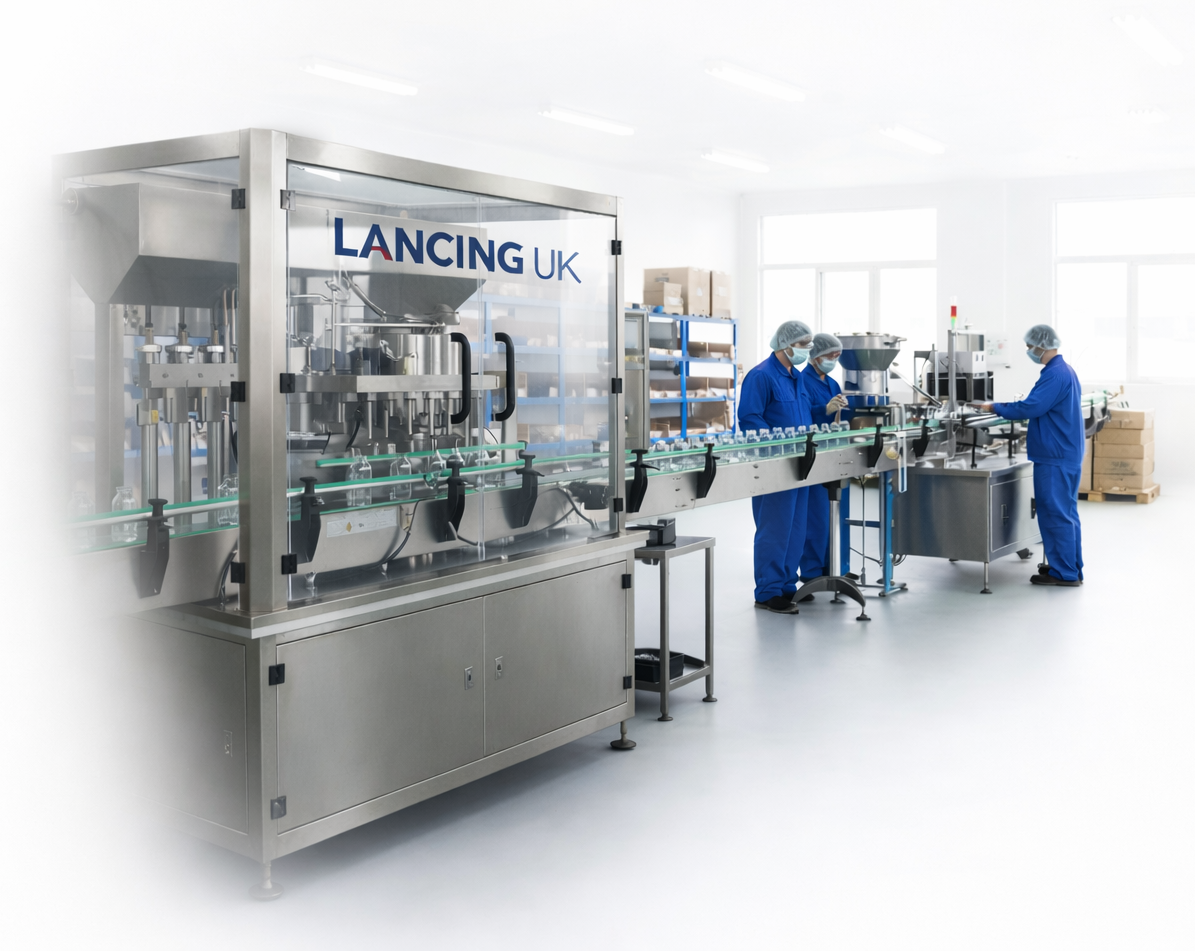
Balance the line around stable good output
Packaging-line balancing matches the effective capacity and recovery behaviour of every stage to the required accepted output. It is based on real products, formats, manual work and interruptions—not a row of headline machine speeds.
Start with the number of accepted packs the production team needs over an agreed operating period. Then assess each stage under the same product, pack, inspection and staffing conditions. A filler may have the highest rated speed and still become the practical constraint when product supply, foaming, nozzle cleaning or replenishment is included. A capper, labeller, inspection station or manual packing task can become the constraint for a different format.
Balanced does not mean that every machine runs at the same displayed speed. It means that upstream supply, processing, transfers, inspection, accumulation and downstream handling can support the required good-output rate without creating persistent starvation, blocking, damage or uncontrolled work in progress. Suitable operating margin and controlled buffers may be needed, but neither can repair a stage whose average effective capacity remains below the requirement.
The balancing record should state the test condition, effective rate, quality result, operator tasks, replenishment pattern, stop causes and recovery behaviour for each relevant format. That evidence makes the design review, FAT, SAT and later OEE work comparable.
| Stage or activity | Evidence to establish | Balancing decision |
|---|---|---|
| Product and empty-pack supply | Supply method, replenishment cycle, pack presentation, interruptions and operator travel. | Confirm that the line can remain supplied without hurried or unsafe intervention. |
| Primary process | Effective rate with representative product, pack, cleaning condition and quality checks. | Set the line requirement and operating margin against the real constraint, not the catalogue maximum. |
| Closing, labelling and inspection | Format-dependent rates, reject causes, sensor behaviour and restart time. | Check that downstream quality processes do not create a sustained queue or hide defects. |
| Transfers and accumulation | Pack pitch, stability, contact limits, usable buffer count, blocked/starved states and release rate. | Use buffers only for a defined disturbance and prove that the line can recover cleanly. |
| Manual tasks | Observed task cycle, variation, replenishment, ergonomic limits and relief arrangements. | Include human work as a real production stage rather than assuming it has unlimited capacity. |
| End-of-line handling | Case, film, pallet or dispatch-unit demand; changeover; material supply; reject and rework routes. | Prevent finished-pack handling from becoming the unmeasured line constraint. |
Use one repeatable balancing method
Run the same sequence for each commercially important product and pack combination. Record assumptions separately from measured evidence.
Define good output
State accepted packs, operating period, quality rules, staffing and planned stops.
Measure effective rates
Use representative product, components and normal operator tasks at each stage.
Map line states
Record starvation, blocking, faults, replenishment and recovery rather than only continuous running.
Identify the constraint
Find the stage that limits stable good output under the agreed condition.
Choose the response
Compare process improvement, capacity, controls, layout, buffers or changed work allocation.
Challenge and repeat
Rebalance after a format, machine, control sequence or operating method changes.
Keep the KPI definition controlled
Overall equipment effectiveness and other manufacturing KPIs are useful only when the site defines the time basis, good-count rule and loss categories consistently. ISO 22400 provides an industry-neutral framework for manufacturing-operation KPIs; the project still needs an application-specific measurement plan.
Questions buyers ask about packaging-line balancing
Each answer gives the controlling principle first and then identifies the evidence needed for the actual line.
What does packaging-line balancing mean?
Packaging-line balancing means matching effective stage capacities, transfer behaviour and operator work to the required accepted output. The aim is stable flow with controlled recovery, not identical speed settings. The balance must be checked for the actual product, pack, format, staffing and quality condition because the practical constraint can move between stages.
Should every packaging machine run at the same speed?
No. Adjacent machines may need different instantaneous speeds so a downstream stage can recover after a short stop or an upstream stage can refill a buffer. What matters is whether the complete line sustains the agreed good-output rate without persistent starvation, blocking or damage. Speed settings should follow the operating strategy and tested recovery behaviour.
How much capacity margin does a packaging line need?
There is no safe universal percentage. The required margin depends on product behaviour, format variation, stop frequency, changeovers, manual work, quality checks, recovery rate and the consequence of stopping a critical process. Define the disturbances the margin must cover, then prove the selected equipment and controls under representative conditions.
Can accumulation fix a packaging-line bottleneck?
Accumulation can absorb a temporary difference between neighbouring stages, but it cannot correct a permanent capacity deficit. If a downstream process produces fewer accepted packs on average than the required line rate, the buffer will eventually fill. Use accumulation for a named disturbance and address sustained constraints through process, equipment or operating changes.
How should manual work be included in line balance?
Treat each manual task as a production stage with an observed cycle, variation, replenishment need, ergonomic boundary and relief plan. Include inspection, loading, packing, material movement and first-off approval. A line is not balanced if the machine cycle is achievable only through rushed, unsafe or unsustainable operator work.
How is packaging-line balance proved at FAT and SAT?
Use an agreed format matrix, representative materials, stable run conditions and recorded first-cause stops. Measure accepted output, queues, starvation, blocking, rejects, manual interventions and recovery. FAT can prove the supplier test condition; SAT should confirm the installed utilities, interfaces, staffing and site operating condition against the agreed protocol.
Information needed for a line-balancing review
Share the evidence that describes the current or proposed operating system. Unknown values can remain controlled actions rather than being replaced with optimistic assumptions.
Project information
- Required good output by product and pack format.
- Current or proposed machine sequence and working rates.
- Observed stops, queues, starvation, blocking and recovery times.
- Manual tasks, staffing, replenishment and changeover work.
- Pack stability, contact restrictions and accumulation limits.
- Quality checks, reject rules and accepted-pack definition.
Application-specific confirmation
This guide explains an engineering method. Final capacity, controls, accumulation, staffing, safety and acceptance criteria depend on the actual product, pack, equipment, site and agreed tests.
Related packaging-line guidance
Use the next guide that controls the same production decision.