
Packaging Line Troubleshooting Guide
A structured method for tracing intermittent stops, quality defects, unstable transfers and recovery problems across connected packaging machinery.
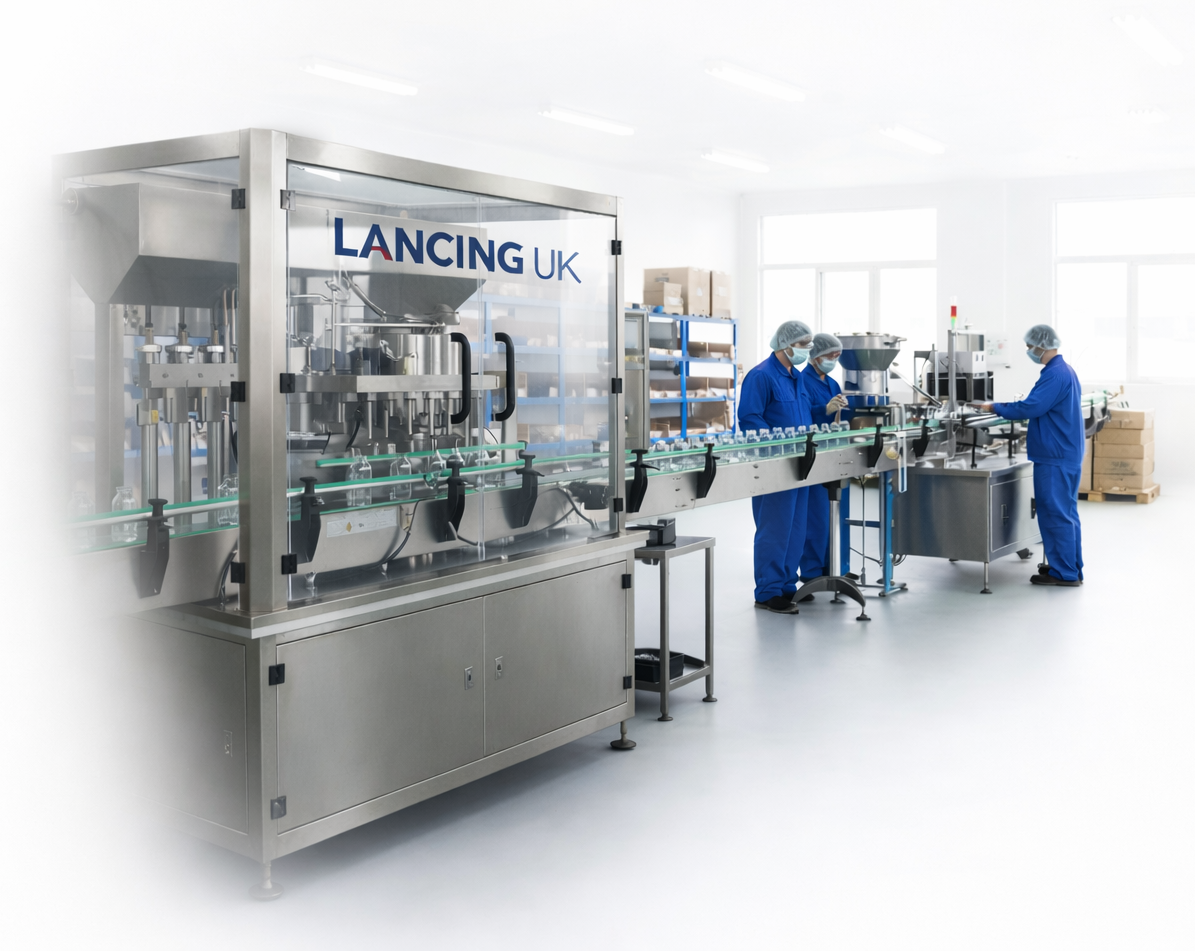
Trace the complete event before adjusting the packaging line
Effective troubleshooting follows the product, machine states and quality evidence across the complete line instead of treating the first alarm as the root cause.
A packaging-line problem may originate in the product, packaging component, mechanical setup, control interface, operator method, cleaning condition or downstream process. The same visible symptom can have several causes, and one cause can produce different alarms depending on where the line is blocked or starved.
Start with containment where safety or product quality may be affected. Identify and control any uncertain packs, then preserve the event evidence. Do not bypass guards, inspection or reject functions to keep the line running while a cause remains unverified.
Protect the evidence before changing settings
Intermittent packaging-line faults are often made harder to find when several timings, guides or thresholds are changed at once. First record the product and format, approved recipe, alarm sequence, machine states, physical symptom, operator action and the condition after restart. Retain affected packs and material batch details where quality is involved.
Separate the initiating cause from the location where production stops. A labeler may alarm because containers arrive in contact, while the spacing disturbance began at an upstream transfer. A filler may stop on container absence because a downstream restriction held the conveyor long enough to change infeed behaviour. Use shared timestamps or video evidence where the event crosses machines faster than a person can observe.
| Observed symptom | Evidence to capture before adjustment | Common boundary to inspect |
|---|---|---|
| Containers fall, rotate or queue irregularly | Container dimensions, centre of gravity, surface condition, line speed, guide settings and exact transfer point. | Infeed spacing, conveyor transition, side-guide pressure, dead plate, star wheel or downstream restriction. |
| Fills vary or product contaminates the pack | Product condition, temperature, density/viscosity, supply level/pressure, nozzle timing, container position and cleaning state. | Product supply, dosing system, nozzle/container interface, drip control and conveyor indexing. |
| Closures cross-thread, sit high or lose torque | Closure and neck samples, feed orientation, thread/fit condition, application setting, container restraint and fault sequence. | Closure feeder, chute, pick/place or placement, capper head, container control and upstream fill contamination. |
| Labels wrinkle, skew or miss position | Container surface, label roll/batch, web path, sensor state, application speed, container rotation and change-part settings. | Product spacing, label dispense, wipe/roll station, container handling and downstream contact before adhesion stabilises. |
| Intermittent line stops move between stations | Timestamped state sequence, initiating alarm, blocked/starved status, accumulation level, operator action and restart path. | Controls handshake, pacing, sensor stability, material replenishment and the system constraint. |
| Rejects are high but the source is unclear | Defect category, detection point, first process capable of creating it, product/format context and retained samples. | Inspection threshold, upstream process, pack tracking, reject confirmation and manual re-entry. |
Use one-change testing and controlled rollback
Form a testable hypothesis, select one factor, state the expected result and retain the original setting. Run the same material and operating condition for enough time to reproduce the fault. If the result does not support the hypothesis, return to the approved state before testing another factor. Any safety-related or protected parameter must remain under the authorised change process.
Escalate the right evidence to the right discipline
- Mechanical: wear, alignment, stability, guide pressure, transfer geometry and component tolerances.
- Product/process: temperature, viscosity, aeration, particulates, foam, contamination and supply conditions.
- Packaging materials: dimensional variation, surface condition, stiffness, electrostatic effects and supplier/batch changes.
- Controls: state sequence, sensor response, timeouts, recipes, network events and restart logic.
- Quality: defect definition, inspection method, sample retention and acceptance threshold.
- Operations: replenishment, changeover verification, cleaning, manual re-entry and shift-to-shift method.
Use the controls integration guide for handshake and recovery issues, the inspection and reject guide for quality containment, and the OEE and bottleneck guide where repeated short disturbances dominate output.
Run a disciplined fault-finding cycle
A short repeatable cycle prevents the fault history being replaced by opinion or uncontrolled setting drift.
Define the symptom
State what changed, where it was first observed, the affected packs and the operating condition.
Reconstruct the sequence
Use alarms, machine states, physical evidence and operator observations to find the initiating event.
Test one cause
Change one justified factor within the authorised process and predict the result before running.
Confirm and standardise
Repeat the condition, restore controlled settings, update the record and train affected roles.
Packaging-line troubleshooting questions
Why does a packaging-line fault appear at a different machine from its cause?
Connected machines share product flow, controls and accumulation. The station that detects an abnormal condition may be downstream of the transfer, spacing, material or handshake event that initiated it.
Should operators change timing values to recover production?
Only parameters within an authorised operating range and procedure should be changed. Protected, safety-related or engineering settings need the site’s controlled change and competence process.
What evidence is most useful for an intermittent fault?
Record a shared timestamp, product and format, recipe, alarm order, line states, physical symptom, operator action, retained sample and short video where permitted. This helps reconstruct the event across machine boundaries.
How can repeated micro-stops be prioritised?
Measure their combined lost good-output opportunity and whether they starve or block the system constraint. High-frequency events with little effect may rank below less frequent events that require long recovery.
When should a material supplier be involved?
Involve the supplier when dimensional, surface, stiffness, closure-fit, label-release or product-condition evidence indicates a batch or specification effect. Compare controlled samples rather than relying on visual impression alone.
Prepare a remote or site troubleshooting review
A concise evidence pack lets the relevant engineer focus on the event rather than reconstructing the basic line arrangement.
- Line layout, machine sequence and the product travel direction.
- Product, container, closure, label, film or case samples from good and affected production.
- Recipe and change-part references, including recent changes.
- Alarm and stop sequence with timestamps, photos or permitted video.
- Frequency, duration and effect on saleable output.
- Cleaning, maintenance, wear and material-batch history.
- Actions already tried and whether the original settings were restored.
Share the line sequence, product and format, affected samples, alarm order and a description of the recovery. Lancing can route the review to the relevant packaging-line discipline.